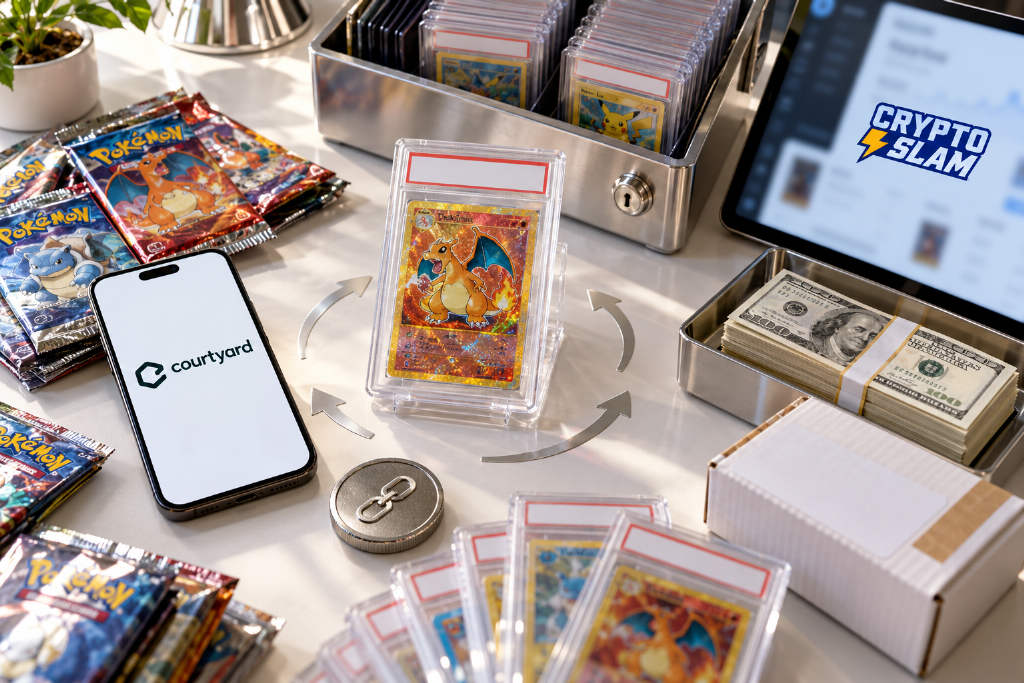
TCG2026-10-21 06:18:32On-chain TCG trading turns cards into high-frequency inventory as Courtyard averages eight sales a month per cardA BlockTempo analysis argues that putting trading card games, or TCGs, on-chain is not just about tokenizing collectibles. The bigger shift is operational: opening packs, quoting buybacks and reselling the same card can now happen inside one tightly linked system. The report cites commentary from X user danny and says Courtyard founder Nico Le Jeune has stated that a single card on the platform is sold an average of eight times a month. It also points to data compiled by Sporting Crypto from CryptoSlam showing Courtyard’s monthly sales rising from about $449,000 in April 2024 to roughly $66 million in April 2025. The article places that growth in a broader market context, noting Pokemon cards have surpassed 85 billion in cumulative production as of late March 2026, while Straits Research projected the global TCG market at about $16.3 billion in 2026. At the same time, the piece says faster turnover does not remove risk. Platforms that offer instant buybacks still need inventory, cash reserves and pricing discipline, especially when users can sell unwanted pulls back into the system. In that framing, on-chain TCG platforms are running both a marketplace and an inventory-risk business.330
Collector Cry2026-10-12 09:17:06CoinGecko says Collector Crypt makes $2.5 million to $5 million a day, with buyback costs rising alongside revenueCoinGecko said on X that trading card revenue for the NFT project Collector Crypt already includes buyback costs. According to the post, the project typically brings in between $2.5 million and $5 million in daily revenue. CoinGecko also said that when revenue moves higher, the cost of buying back trading cards rises as well. The post added that subtracting buyback costs from revenue gives a clearer view of the project’s retained income after those buybacks. The statement focused on how gross revenue can differ from the amount left after repurchase spending is accounted for. No other figures or time frame were disclosed in the brief update cited by Techub News.320
WikiMasters2026-10-03 10:37:55WikiMasters turns French Wikipedia pages into trading cards as the game catches on in FranceWikiMasters, a browser game built around French-language Wikipedia entries, has broken into the French internet as players return every 10 minutes to open a new pack of cards. According to coverage cited in the source material, the game launched in March 2026 and surged in September, with its founder saying it reached a peak of 215,000 daily active users. The concept is simple: each French Wikipedia entry becomes a collectible card. Every pack contains five cards, and rarity is tied to page metrics such as views, while some reports also say article length and quality can affect stats. Players can collect, trade, sell, and use the cards in quiz-style battles. The in-game marketplace uses a virtual currency referred to by the official site as WikiCoins, while Numerama called it wikibidou. The craze also helped lift attention for Destroy Any Website, a separate French-made web game that lets users blast apart any webpage with pixel-art weapons. WikiMasters is free to register for, though reports say it also offers a Pro plan priced at CAD 9.99 per month, or about EUR 6.5, with more frequent supplies, rarer cards, and more daily battles and auctions.1470
Collector Cry2026-09-29 23:55:00Collector Crypt’s $1 Billion Volume Claim Hinges on a Tokenized Trading Card LoopA PANews analysis argues that Collector Crypt should be viewed less as a standalone NFT card marketplace and more as infrastructure for putting graded physical trading cards on-chain. The system brings together sourcing, grading, warehousing, custody, tokenization, random pack opening, instant buybacks, marketplace trading and physical redemption, then exposes those functions to wallets, NFT marketplaces and external projects through APIs and white-label integrations. PANews says this setup helps explain why the project has been able to report more than $1 billion in cumulative platform transaction volume and later describe gross revenue above the same mark. The article also says a large share of that figure appears to come from a repeated cycle in which users open packs, sell the NFT cards back to the platform, and those same cards are placed back into inventory for future draws. That makes the headline number closer to cumulative turnover than audited operating revenue. PANews reviews the project’s business model, chain support, shipping and redemption flow, competitive position, team and funding history, and token mechanics for CARDS. Its conclusion is split: Collector Crypt is worth tracking as a physical-collectibles infrastructure layer for on-chain TCG products, but business growth alone does not yet justify a bullish view on CARDS, especially with ongoing unlocks, discretionary buybacks and limited public disclosure around custody and financial transparency.790
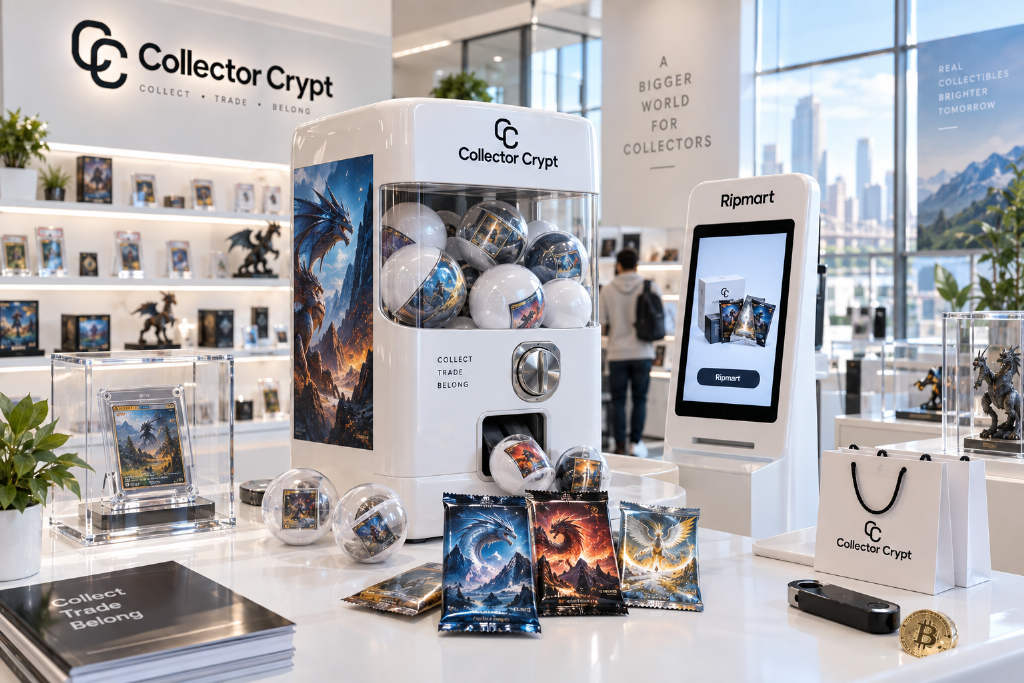
Collector Cry2026-09-22 07:05:18Ripmart may be the next catalyst for CARDS as Collector Crypt looks beyond crypto-native usersCollector Crypt’s token CARDS has lagged even as Bitcoin rebounded, and 0xResearch author Kunal Doshi argues the move says more about capital rotation than fading demand for on-chain collectibles. In his analysis, Bitcoin rose nearly 30% from its $63,000 low while CARDS fell 8%, as traders shifted attention and liquidity toward stock token pairs on Robinhood Chain and Solana. He points to a weekly net revenue peak of $3 million in the week ending Aug. 16, just before stock token volumes accelerated, followed by a period of weaker metrics for Collector Crypt. Doshi says those trends have started to reverse. After three straight weeks of decline, net revenue has rebounded, and the team has added gacha machines tied to rising interest in Riftbound and Dragon Ball card packs, with those categories contributing 8% to 16% of total revenue in recent weeks. He also argues the market is overlooking Ripmart, a product he believes could resemble a consumer live-shopping app similar to Whatnot. While official details remain limited, he says such a model could let users buy sealed packs from Collector Crypt inventory, watch live openings, and sell eligible hits back into the platform. In his view, that could push Collector Crypt deeper into the Web2 consumer market and reduce its dependence on crypto liquidity alone.580
Deadstock2026-09-14 23:54:01Deadstock raises $2.5 million in seed round led by Bullish CapitalDeadstock, a trading card market infrastructure project, has raised $2.5 million in seed funding, according to ChainCatcher. The round was led by Bullish Capital, the venture arm of Bullish (NYSE: BLSH), with participation from a group of angel investors. The company said the new capital will be used to complete its public testing phase and move into its next stage of development. Deadstock added that the funding is aimed at building infrastructure for a global, liquid trading card marketplace. The announcement identifies the raise as a seed round and names Bullish Capital as the lead investor, while not disclosing the identities of the angel backers. No additional financing terms were provided in the release.1120
on-chain pack2026-08-10 06:00:09On-chain pack openings cool in July as memecoin activity picks upOn-chain “gacha” or pack-opening activity posted its first monthly pullback since February, with July spending dropping to $290.3 million from June’s record $354.8 million. Collector Crypt stayed on top with $154.9 million in volume, but its spending fell 26% month over month. Courtyard moved the other way, setting a record at $85.3 million and taking 29% of July’s total, a sign that demand from less crypto-native users may still be intact. The report also points to a possible rotation in speculative capital. During July, Collector Crypt’s daily average spending fell from $5.6 million in the first seven days to $3.4 million in the last seven days, while Pump.fun’s daily average trading volume rose from $320.6 million to $388.5 million. The authors stop short of calling it a direct causal link, but they argue the pattern fits a market where active on-chain traders move between whichever segment is hottest. Outside pack openings, the broader market showed lower volatility and lower cross-asset correlation, while BTC and ETH ETF flows became more aligned. The report says that if those calmer conditions hold, the missing ingredient for a new bull run is sustained upside in BTC.2200
Japan2026-07-28 02:03:56Japan lawmakers form trading card caucus after $16 million Pokémon card saleJapan’s ruling Liberal Democratic Party has moved to put the trading card market under closer scrutiny after a rare Pokémon card sold for about $16 million in February. On July 23, a cross-party parliamentary group, the Trading Card Promotion Parliamentary League, was formally launched in the Diet to examine risks tied to counterfeit cards, bulk hoarding for resale, and money laundering. According to the report, caucus head Seiji Kihara said trading cards are an industry that can compete globally, but the market is now facing visible structural problems. He listed three main concerns: circulation of counterfeit products, large-scale stockpiling for resale, and the use of cards in money laundering because individual cards generally lack unique identifiers, making ownership transfers hard to trace from printing to resale. Japan’s Ministry of Economy, Trade and Industry estimates the domestic trading card market grew from ¥177.6 billion in fiscal 2021 to ¥338.4 billion in fiscal 2025, nearly doubling in four years. The report also pointed to a pricing imbalance: franchises such as Pokémon and Yu-Gi-Oh! originated in Japan, but card values are heavily influenced by grades assigned by U.S. authenticator PSA. The caucus is expected to keep gathering views from manufacturers and grading firms before drafting policy proposals.2240